2025 pushed ecommerce to new heights: in the U.S. alone, about 23.5% of all sales happened online, which honestly still blows my mind a little. And the momentum isn’t slowing down; experts already expect this share to jump again in 2026.
However, when ecommerce grows this fast, the rules of the game change just as quickly. Staying afloat is one thing, but staying ahead is a completely different story.
So, in this article I want to share the 10 major ecommerce trends shaping the landscape right now and will certainly appear in 2026. And, of course, I’ll show you how Offiro stores fit neatly into each of these trends, whether you’re just thinking about buying a store or already clicked that “buy now” button and are settling into your new entrepreneurial adventure.
Ecommerce Trend 1: More Customers Than Ever and More Competitors Too

Let’s start with the big number everyone loves quoting: the U.S. ecommerce market is expected to hit $1.3 trillion by the end of this year. Trillion with a “T.” That means people are living online now, and they’re perfectly ready to spend even more in 2026.
That’s a huge opportunity for all of us.
Remember how in our Q3 Small Business Index review we mentioned that confidence among small business owners hit an all-time high? It means entrepreneurs feel brave and excited enough to invest, experiment, and grow.
But this booming market has a flip side. When people see a big pie, they want a slice. Or two. So naturally, competition is getting fiercer. New stores appear every week, brands pump money into ads like there’s no tomorrow, and customers are spoiled with choices.
It’s no longer a market where you can stroll in at a leisurely pace. If you slow down, someone else overtakes you before you even notice.
Where Offiro fits in:
This is exactly why Offiro stores are designed to give beginners a head start. You’re entering the race with a store that’s already been tested, optimized, structured properly, and has an audience or traffic history behind it. In a space where speed matters, Offiro basically hands you the keys and says, “Go. You’ve already got a lap on the competition.”
Ecommerce Trend 2: Customers Expect Quality Service and Won’t Settle for Less
Here’s a funny thing about shoppers today: the more ecommerce grows, the more spoiled ( in the nicest possible way) buyers become. And honestly, can we blame them? When every store is fighting for attention, customers get used to comfort fast. They like feeling catered to. They like speed. They like everything “just working.”
And once people get used to that comfort, they are not letting it go.
Shoppers aren’t easily impressed anymore. If your store isn’t offering quick delivery, a mobile-optimized site ( or even better, an app), personalized deals, and smooth navigation, they’ll bounce out before checking any of your products.
It sounds harsh, but it’s true: if the buying experience isn’t seamless, people won’t give you a second chance.
Where Offiro fits in:
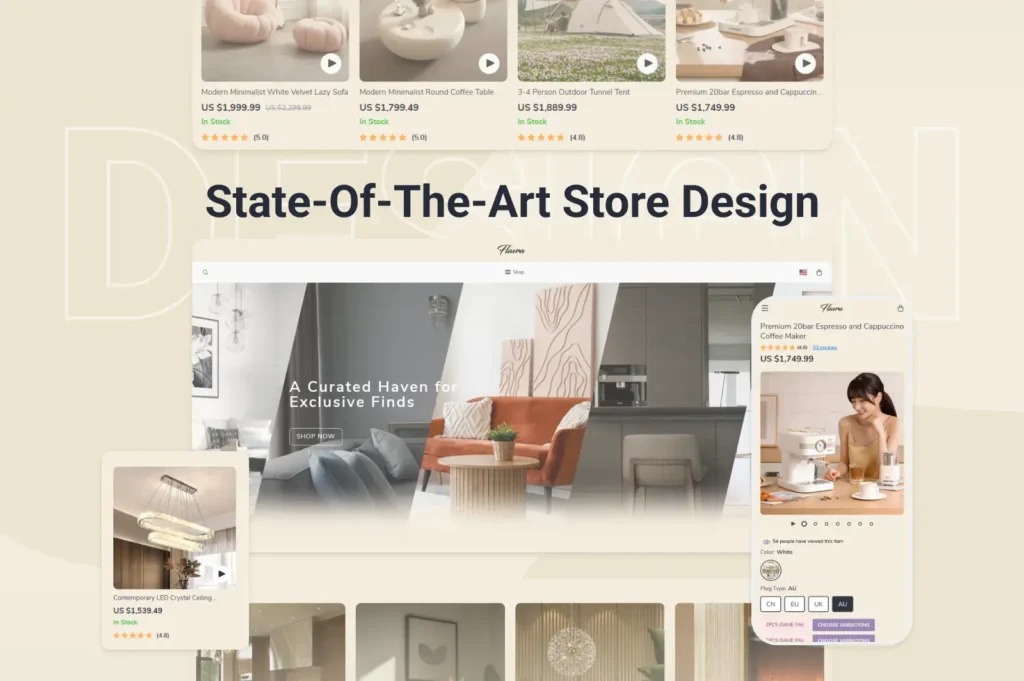
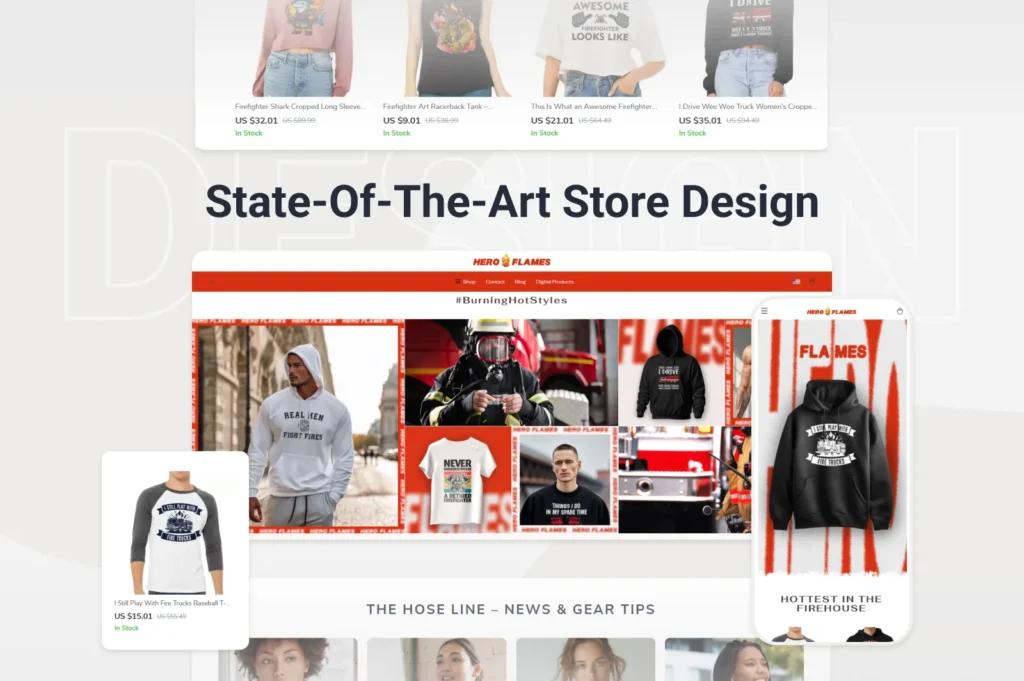
This is exactly why Offiro doesn’t just hand you “ a website.” It hands you a clean, modern, mobile-friendly storefront that’s built for real shoppers. Pages load quickly, layouts are intuitive, and the structure already follows best practices that big brands use.
Plus, with Offiro stores you don’t have to wrestle with complex UX decisions: the foundations were already tested and polished. You start with something that feels good to the customer from day one, which is half the battle in ecommerce.
Ecommerce Trend 3: Advanced Analytics Is New Survival Gear

Metrics like AOV, CLV, and all the others we broke down in our analytics guide have always been essential for running your store — that part hasn’t changed.
What has changed in 2025 is this:
For years the advice was “know your numbers.” Now it’s “know your numbers and everyone else’s too.”
You need to track:
- How do your prices compare to similar stores?
- What’s trending on TikTok this week ( or today, or this hour) that affects your niche?
- Which products are rising stars you can add without ruining your brand’s vibe?
- Which categories are slowing down so you don’t overinvest?
If you’re only staring at your own dashboard, you might feel like everything’s fine while your competitor across the street quietly doubles their sales because they caught a trend you didn’t even notice.
Where Offiro fits in
Offiro stores are built on the Sellvia ecosystem, which gives beginners a pretty unfair advantage ( in a good way). Inside the platform, you can explore popular, profitable products from dozens of niches, see which items are trending, and get an idea of what customers are actually buying right now.
Plus, the ecosystem includes market insights, competitor-friendly price ranges, product demand trends — tools that help you look beyond your store instead of getting trapped in your own bubble.
Ecommerce Trend 4: AI Is Changing the Rules
If 2024 was the year everyone talked about AI, then 2025 is the year it completely melted into everyday business life. Honestly, it’s getting harder and harder to tell where AI-generated content ends and human-created content begins — sometimes even I have to squint and think, “Wait… did a person write this or did someone’s robot get poetic again?”
And the list of things you can outsource to AI now just keeps getting longer: content creation, product descriptions, customer support replies, data analysis, trend forecasting, writing ad copy, explaining complex metrics in plain English — you name it, there’s a tool for it.
But here’s the twist that many outlook:
Anybody can spam out hundreds of AI-generated posts or rely on tools for every tiny decision. But that usually leads to messy mistakes, tone-deaf content, or a business that feels robotic. Real customers still want a human touch. And real business owners need to understand the insights AI gives them, not blindly trust every suggestion.
The winners in 2025 are the ones who know how to get the best output with the fewest errors. They treat AI like a smart assistant, not a replacement for real judgment.
Where Offiro fits in:
Offiro stores give you a major leg up here because the tough part — structuring, optimizing, branding, layout, product organization — is already done before you even bring AI into the picture. So instead of using AI to fix messy problems, you get to use AI for the fun stuff: creating content, testing ideas, improving marketing, and speeding up tasks.
Ecommerce Trend 5: Personalization Is the Whole Game

A few years ago, “personalization” basically meant adding someone’s first name to an email subject line. And at the time people were thrilled about it. But if that’s all you’re doing now, customers will shrug and move on. Maybe even roll their eyes a bit.
Thanks to advanced analytics tools and AI being everywhere, there’s really no excuse to skip personalization anymore.
Modern personalization looks more like this:
- Showing products based on what a customer searched for last week.
- Suggesting bundles that match their previous purchases.
- Highlighting items they liked on social media.
- Adjusting offers depending on how they browse your store.
Basically, instead of saying “Hello, John!”, you now need to say “Hey John, we noticed you liked these hiking boots, so here’s the matching backpack people love pairing with them.”
Making the customer journey intuitive is great, but making it personal is so much better. And it’s becoming the standard.
Where Offiro fits in:
Offiro stores are built with personalization-ready structures from the start. Because the layouts, collections, and user flows are already optimized, adding personalization tools (recommendation apps, dynamic sections, email automation, etc.) becomes way easier.
Plus, since the Offiro ecosystem helps you understand which products perform best and how customers behave, you can tailor your offers without guessing.
Ecommerce Trend 6: Smart Marketing Matters More Than Ever
Here’s the not-so-fun side effect of a booming, crowded ecommerce market: ad prices keep climbing. In 2025 you absolutely cannot rely on a single traffic source anymore. One platform changes its algorithm, one ad account gets restricted for no obvious reason, one trend shifts, and suddenly your whole strategy collapses like a Jenga tower.
That’s why diversification defines marketing strategies.
You need:
- organic traffic,
- paid ads,
- social media visibility,
- email marketing,
- influencers,
- retargeting,
- partnerships
Basically every reasonable route you can use to reach your audience. And you have to test things constantly, because what worked last week might flop this week for no logical reason.
So be prepared to spend money on marketing in 2025. But more importantly, be prepared to spend it wisely.
Where Offiro fits in:
Here’s where Offiro gives you an actual advantage: instead of guessing your way through ads, you can tap into Offiro’s marketing services, which are designed to deliver guaranteed results and optimized performance marketing. No sinking money into campaigns that go nowhere.
You get experts who already know what works, how to scale it, and how to stretch your budget efficiently.
Ecommerce Trend 7: Stores Are Turning Into Social Media

One of the wildest shifts in ecommerce over the last couple of years is that stores aren’t just stores anymore. With omnichannel strategies becoming the norm, every brand out there is trying to become a mini–media company.
You’ve probably noticed it yourself: suddenly every shop is posting on X, Facebook, YouTube, TikTok, Instagram, and any other platform that pops into existence. And the goal isn’t just to grab quick traffic, though that’s a big part of it, as we talked about in the previous section.
There’s a second, less tangible reason: expertise, trust, familiarity.
Basically, stores are transforming from websites with names into characters with personalities. They have:
- a tone of voice,
- values,
- a sense of humor,
- little quirks,
- sometimes even full-blown lore (looking at you, Gen Z brands…),
and customers love it. People went from buying products to buying stories, vibes, identities. In 2025, shoppers expect brands to talk to them, entertain them, educate them, and not just sell to them.
Where Offiro fits in:
Offiro stores give you an easy head start here because you’re not building a brand from absolute scratch. You get a store with a clear niche, visual identity, and a voice you can grow into. Plus, with Offiro’s marketing services and content-making support, you can quickly create the social presence that turns your store from “ a website people visit” into “ a brand people follow.”
Ecommerce Trend 8: Digital Products Are Booming
Somewhere along the way, store owners collectively understood the magic behind digital products: no shipping fees, no stock limits, no warehouse, no angry customers tracking their delivery, and you keep 100% of the revenue. It’s basically the ecommerce version of a cheat code.
And 2025 cranked this trend up to eleven.
Now you can find thousands of digital guides on everything imaginable: healthy habits, productivity systems, skincare routines, gardening hacks, relationship psychology, photography basics, you name it.
Then add:
- curated online courses,
- premade websites,
- digital planners,
- templates,
- UI/UX kits,
- 3D design assets,
- marketing bundles
and you’ve got an entire ecosystem of products people happily pay for, even though they’ll never physically touch any of it. And they don’t regret it at all, because digital goods deliver instant value.
Where Offiro fits in:
Offiro has been steadily expanding into niches where digital products shine, like design-focused stores or TikTok-focused shops. Many Offiro stores are already packed with digital or semi-digital items, which means you can tap into this high-margin world without reinventing your entire business model.
Plus, the Sellvia ecosystem makes it super easy to add more digital products or layer them on top of your existing catalog.
Ecommerce Trend 9: Small Businesses Are Moving Into B2B

Most online stores start the same way: selling to individual customers. That’s the classic B2C model (business-to-customer) and it’s a fantastic way to learn the ropes. But what a lot of new entrepreneurs don’t realize until they’re knee-deep in growth: once your store starts gaining traction, you don’t necessarily want more tiny sales — you want bigger ones.
And that’s when the world of B2B (business-to-business) starts looking really appealing.
That might mean:
- selling 300 units of a product to a company instead of 3 units to a single customer,
- supplying office teams or event organizers,
- offering bundles for agencies,
- or even providing digital resources for entire departments.
Bulk orders do two wonderful things at once:
- They boost profits significantly, often without increasing your workload
- They increase your brand’s credibility, because other businesses trust you enough to rely on your products
It’s a whole different level of stability and visibility, and once a store gets its first big B2B client, it’s hard not to chase more.
Where Offiro fits in:
Many Offiro stores are built in niches that naturally attract B2B buyers: wellness, office products, design assets, learning materials. And since your Offiro store comes with solid branding and professional structure, businesses see you as a legit partner right away.
Plus, Offiro’s marketing services can help you position your store for B2B visibility by creating dedicated landing pages, crafting outreach emails, or showing companies why your store is the smarter choice.
Ecommerce Trend 10: Local Businesses Are Finally Getting the Spotlight
And here’s one more thing to be excited about: local businesses in the US are gaining real momentum. Even with Amazon still holding more than 35% of the entire ecommerce segment, smaller players are starting to push forward by doing something the giants can’t really do: hyper-targeting specific groups and precisely tailoring offers.
Small businesses can’t sell everything to everyone. That’s Amazon’s game. But what small stores can do is solve very specific problems for very specific people. And customers love that. They love finding stores that “speak their language,” match their values, or fit their lifestyle better than giant marketplaces ever could.
Where Offiro fits in:
Offiro stores are literally built around this idea. Each store has a clear niche, a defined target audience, and a brand identity that speaks directly to that group. Instead of being another generic shop in a sea of generic shops, you start with a store that already feels local, authentic, and community-friendly even if you’re selling nationwide.
Plus, with Offiro’s marketing and analytics support, you can double down on those hyper-targeted groups, speak to them in their own voice, and carve out a space where massive competitors simply can’t follow.
Final Thoughts

Ecommerce in 2025 is shape-shifting fast. And if you’ve made it this far, you already know the landscape is full of opportunities and challenges. Let’s quickly rewind what we’ve covered:
- More customers — and more competitors. The market’s huge, but so is the race to stand out.
- Buyers demand quality service. Fast delivery, mobile-first design, smooth UX: it all matters.
- Advanced analytics is mandatory. Knowing your numbers and the market’s numbers is the new baseline.
- AI is everywhere. But success comes from using it wisely.
- Personalization is the default expectation. Customers want unique journeys, not generic funnels.
- Ads are getting more expensive. Diversification and smart marketing are key to surviving 2025.
- Stores are turning into social media personalities. Content builds trust, familiarity, and identity.
- Digital products are booming. Zero shipping, high margins, and instant value for the customers.
- Small businesses are embracing B2B. Bulk orders and partnerships are becoming major growth paths.
- Local-focused brands are gaining traction. Hyper-targeted offers beat giants in specific niches.
Offiro stores are built with these trends already in mind, so you’re not starting from scratch — you’re starting with a solid, modern foundation built for exactly this era of ecommerce.
And you can see it all for yourself before making a decision. During the Offiro trial, you can explore your store, check its performance, dive into the analytics, try the marketing tools and get a real feel for how your future business could work.
Whenever you’re ready, your Offiro store is waiting for you.